
Sake ABC Foundations - B2. Reading a Label
Five Things to Read on a Sake Label

You already know the five categories from B1, which gives you a basic vocabulary. But when you look at a real bottle, you’ll see even more: kanji you can’t read, numbers that don’t mean much yet, and brewery names you’ve never seen before. Here’s what you should focus on.
Five Things Worth Reading
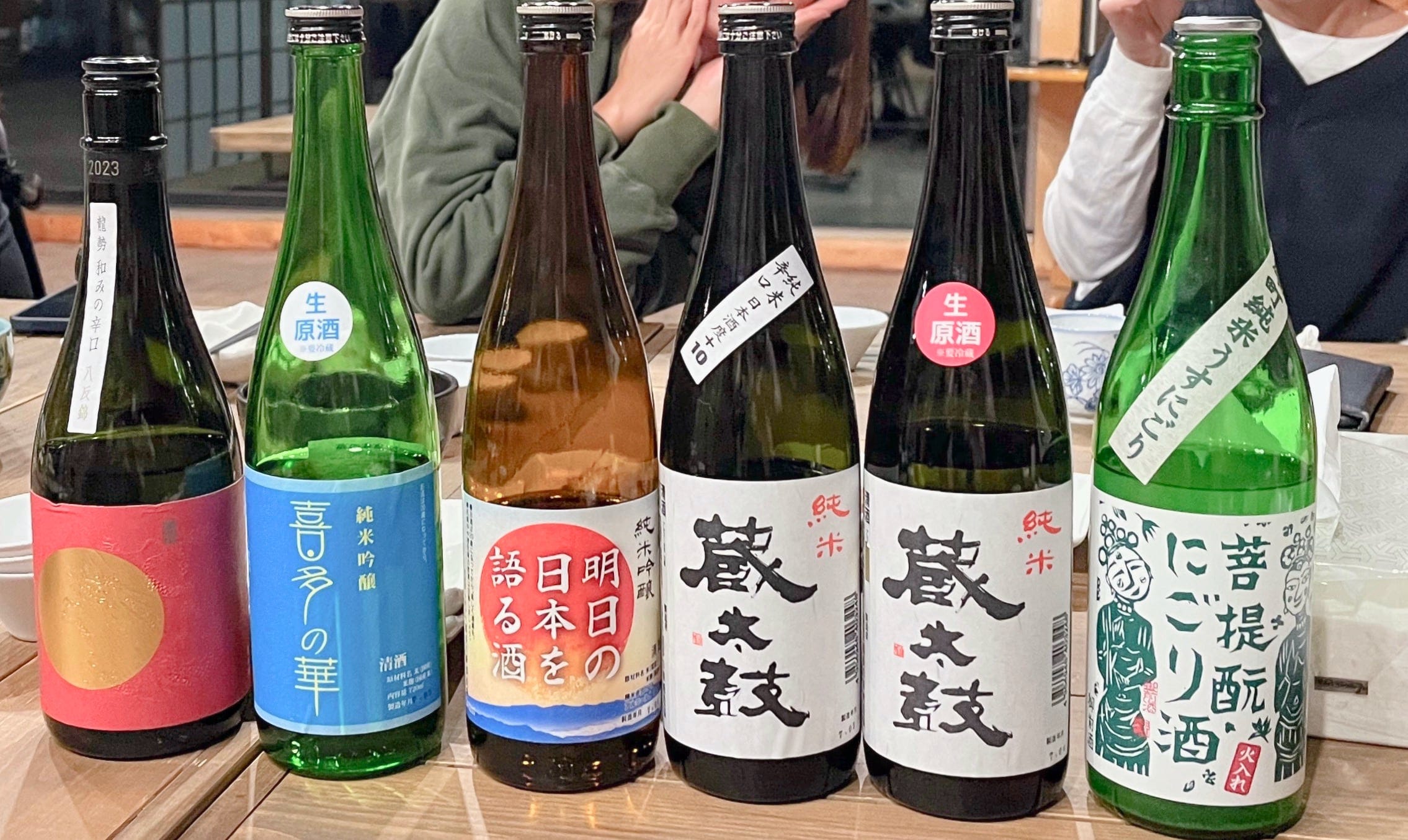
The brewery name, and the label name. These aren’t always the same. A brewery often sells under a brand name that’s different from its company name. For example, Kubota is a brand, but the brewery behind it is called Asahi Shuzo. The large kanji on the front is usually the brand name, while the actual company name is often in smaller text somewhere else on the label.
Either way, this is more important than the category. Once you get to know the styles of two or three breweries, seeing that name again, whether it’s the brand or the brewery, is the best sign that you’ll probably enjoy what’s inside. This tip keeps helping you even after you’ve learned everything else on this list, and most front labels are unique enough to recognise by sight before you can read any kanji.
Seimaibuai 精米歩合. This is the polishing ratio, or how much rice is left after milling. For example, 60% means 40% of the grain was polished away. A lower number means more polishing and usually a lighter style. It won’t tell you if a sake is good or if you’ll like it, but it gives you a rough idea of what to expect.
Junmai 純米 or not. As covered in B1, look for 純米 on the label, usually right on the front or neck, to see if brewer’s alcohol was added. Style clue, not quality judgment.
Nihonshudo 日本酒度, usually shown as SMV. Runs from negative (sweeter) to positive (drier). Zero is neutral, roughly the same weight as water. +3 to +5 onwards leans dry, -3 and below starts to taste noticeably sweet. Furthermore and to add to the inconvenience of figuring out a label, sometimes this data is available on their website, not necessarily on the bottle.
Don’t expect the gaps between numbers to feel even. The difference from +1 to +3 can be hard to notice, while +3 to +5 might be obvious. Acidity and umami also affect how sweet a sake tastes, and this number does not measure those.
Try this. Find two sake with SMV numbers as far apart as possible. If you can, choose ones from the same brewery and style, so the number is the main difference. Taste them side by side. Once you can tell the difference, try again with a smaller gap, like +1 versus +3, and see how much harder it is.
Nama 生 or not. If you see 生 or namazake 生酒 on the label, it means the sake is unpasteurised. It needs refrigeration, won’t keep as long, and tastes livelier and fresher. By law, it also has to show a storage warning, usually 要冷蔵 (”needs refrigeration”), somewhere on the label. If you see either one, drink it soon.
The easiest way to check in a shop is to look at what’s in the fridge. If only some bottles are cold, those are most likely the nama sakes. A good shop will also tell you if something needs to stay cold.
What to Ignore for Now
Other than alcohol percentage, if that’s something you track, you can ignore acidity numbers, amino acid content, yeast strains, vintage years, and award stickers for now. These do interact with the five things above, but their effect depends on those, so they’re not worth tracking on their own yet.
Award stickers get a special mention. They mean a sake did well in one competition, and there are many competitions with different standards. It does not mean that it’s the right choice for your meal or your palate. Use the five points above to find what you like; treat the sticker as a footnote.
Two Labels, Side by Side
Bottle A: Junmai Ginjo 純米吟醸, seimaibuai 55%, SMV +2, no 生. It’s clean, moderately dry, and fragrant, with a bit of body. This bottle is pasteurised and shelf-stable. It is a nice ballpark that should be a reliable pick for most pairings with food.
Bottle B: Junmai 純米, seimaibuai 70%, SMV -1, 生 marked. This one has more rice flavour, a fuller body, and a touch of sweetness. It’s unpasteurised, so keep it cold, drink it soon-ish, and expect a livelier texture, maybe some fizz.
Try this. Pick any two bottles, or a flight if you’re at a place that offers one. Read the five points before you open anything and guess how each will taste. Then try them. The difference between your guess and the real thing is where you actually learn, and that gap gets smaller every time you do this.
Two More Practice Labels
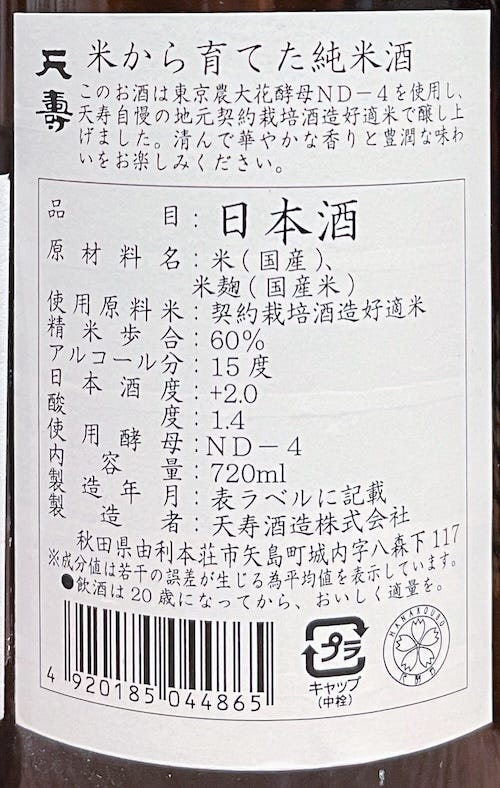
Practice Label 11
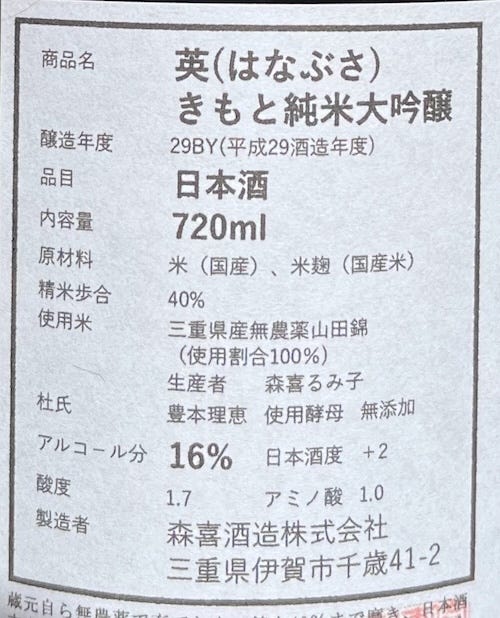
Practice Label 22
Next section:
Previous section:
Junmai 純米, seimaibuai 60%, SMV +2, no nama 生 marked. In terms of polishing, it is in Junmai Ginjo territory. It may be more aromatic and lighter than other junmai, and moderately dry at +2. It is pasteurised, so it is shelf-stable.
Junmai Dai Ginjo 純米大吟醸, seimaibuai 40%, SMV +2, no nama 生 marked. This is going to trend towards aromatic forwaards ligthter body, moderately on the dry side at +2, pateurised. This could be a sake that would work with ligther foods or we sipped on its own. Extra points: The brewery is Moriki 森喜, the product name is listed at the back in this case too, Hanabusa 英(はなぶさ).