
Pre-SSC, part 2
Lost in Sake Geography

Only five days before the official start of the course, how are things going, you ask? Chaotically, wonderfully, overwhelmingly, just as expected! I have not made a significant dent in the course material, read about half of it, and I probably remember like 8%. Has it been an interesting read? Oh, yeah! With the holiday season and much to do at the farm closing out for the season, it has kept me busy.
Making maps for remembering all the important locations mentioned across the book has also been keeping me busy, but it is a great study tool. Mountain names, mountain ranges, rivers and basins, etc. It is quite challenging to cram all the distinct locations, some of them similarly sounding, like the Kitakami River in Iwate and Miyagi and the Kamikawa one in Hokkaido, both significant for different reasons and in entirely separate prefectures.
With my expectations of being able to entirely read at least one time the course book and have notes of about 50% crushed, I had to devise a different study plan, quickly. So for the past couple of days, I have tried to focus on that. Having a look at the provided syllabus and organising all my current notes on each prefecture, to be able to move faster through the content. When, inevitably, one of my cats sat on my laptop or textbook at regular intervals, I used dictation tools. Those proved a lifesaver, allowing me to keep writing while my cat claims my keyboard as her own. Technology is wonderful!

Week One: Revisiting the foundations
The course will start by going through the foundations, then on the second day Hokkaido and Tohoku. During class on the basics of sake making, we will analyse all the different components that go into sake making and the base of this course, as explained in my part 1, environment, rice, human element, water, microbes, and culture. We will go into details, like fermentation mash history and developments, for example. That section has been one of my favourites in the book and has served as a great timeline to pin some other developments and gain an extra layer of context.
That is why I love taking extensive notes on tools like Obsidian, where I can easily make connections of different topics and jump between them. Clearly understanding those connections really speeds up the understanding of how different prefectures’ brewing traditions interact with their environment, for example. That’s how my brain works, I guess, connecting the specifics to build the general knowledge of a specific topic.
How breweries weave these components together varies wildly, even between neighbours. The brewery down the road might work with entirely different conditions. Not only in different areas of the country, but sometimes even inside the same town or local regions, one of those components might be considerably different, from water hardness to access to rice varieties to valley microclimates. Every brewery is its own micro environment as well.
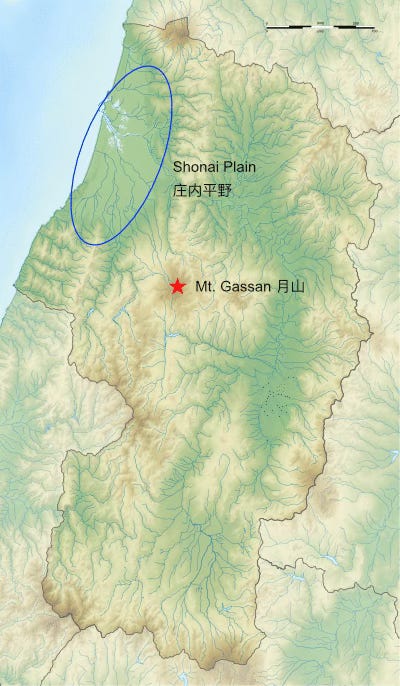
My burning questions so far are about Koji
Looking forward to starting classes next week, I am really excited about the Koji section of the basics. The Koji mold is the one that breaks down rice starches into sugars. Literally, it’s sake’s fermentation engine. Given its crucial role, I would like to explore if there are any particularities in the choice of Koji in each Prefecture. Aside from the usual conversation between yellow, white, and black koji choices between sake, shochu and other products. While sake brewing and consumers alike pay close attention to yeast strains, I have not read much about that regarding Koji, besides the different methods of propagation like [so-haze and tsuki-haze](https://www.nada-ken.com/main/en/index_h/132.html). Specifically, I am interested in the various “breeds” or strains inside each category and how those affect the sake, again, something I haven’t found much about.
One case that caught my attention is Hanaomoi, a rice strain developed in Aomori in 2002. The goal was to increase local sake quality, which at the time, relied heavily on Yamadanishiki rice from outside the prefecture for premium grades like Ginjo. Developing a strain suited to Aomori’s cooler climate wasn’t just about quality, it was about identity and providing tools for the local breweries. Recently, prefectures are trying to work and develop products made with local ingredients, creating local strains of rice and yeast. Some of which have become the pillars of Geographical Indications for their respective regions, part of a broader trend for creation of more GIs (four new GIs for sake in Japan in 2025 alone). Although I’m skeptical of this strategy’s usefulness, that’s a topic for another day. More importantly, it recognises the need for curating and maintaining locally occurring strains alongside those privately developed or propagated that are available nationwide.
Using commercially available yeast and Koji is, of course, more stable, predictable in terms of aromatics, and allows for fine-tuning for what the Toji wants a particular brew to be. Native moulds and yeast found in each brewery are quite different. Yet those commercially available yeasts and Koji were once isolated from naturally occurring populations. Then propagated in isolation, carefully selecting the desired traits and levelling the playing field for breweries across the country.
While much has been written about the history of yeasts like the Association yeasts, including how and where they were isolated, I haven’t found much information on the history of koji strains. How do we select a koji strain to go well with a rice strain? What does that even mean? Are the characteristics that we use when selecting a yeast strain applicable to koji? And if so, why isn’t this discussed more? Koji is the cornerstone of sake brewing, sake professionals repeat this over and over again, yet comprehensive education about it remains surprisingly scarce, even among professionals.
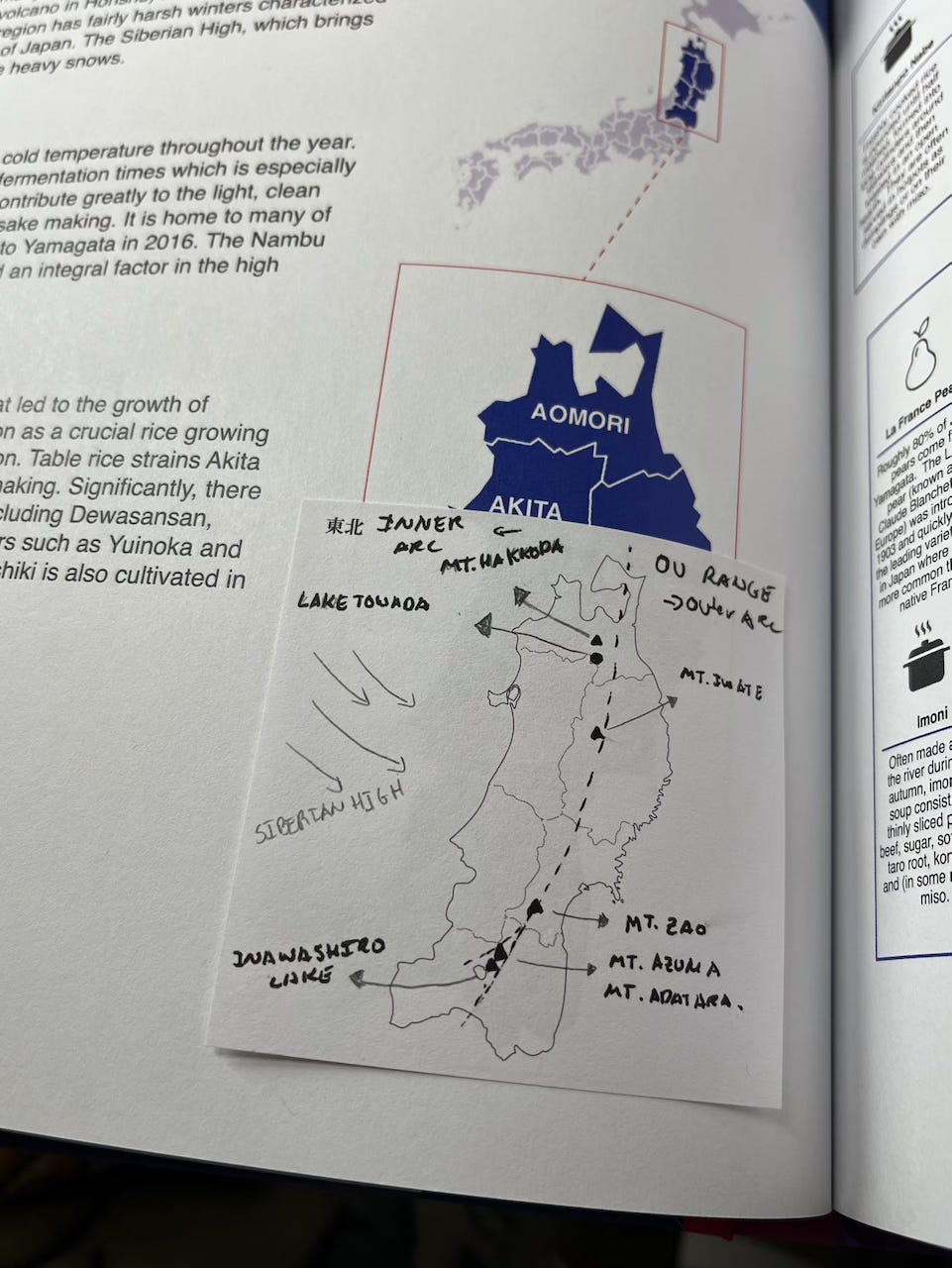
Three days to go. Messy notes, crowded maps and at least three mountains I keep confusing after three weeks of cramming. Consider me ready! More on the regionality of sake (or perhaps the lack thereof, if you caught my drift in part 1 ;)) next week. I will do my best to share here what I learn next.
If you are interested in those topics, as I am, reach out! I am always interested in continuing the conversation about these topics.
Thanks for sharing your journey. Appreciating your obsession with notes! Cramming also doesn’t work for my Nihongo learning. So I’m also experimenting with a different approach this year.